
Energy and Utility
Rethinking Cooking Energy in African Homes
Founder
Sunday, May 17, 2026
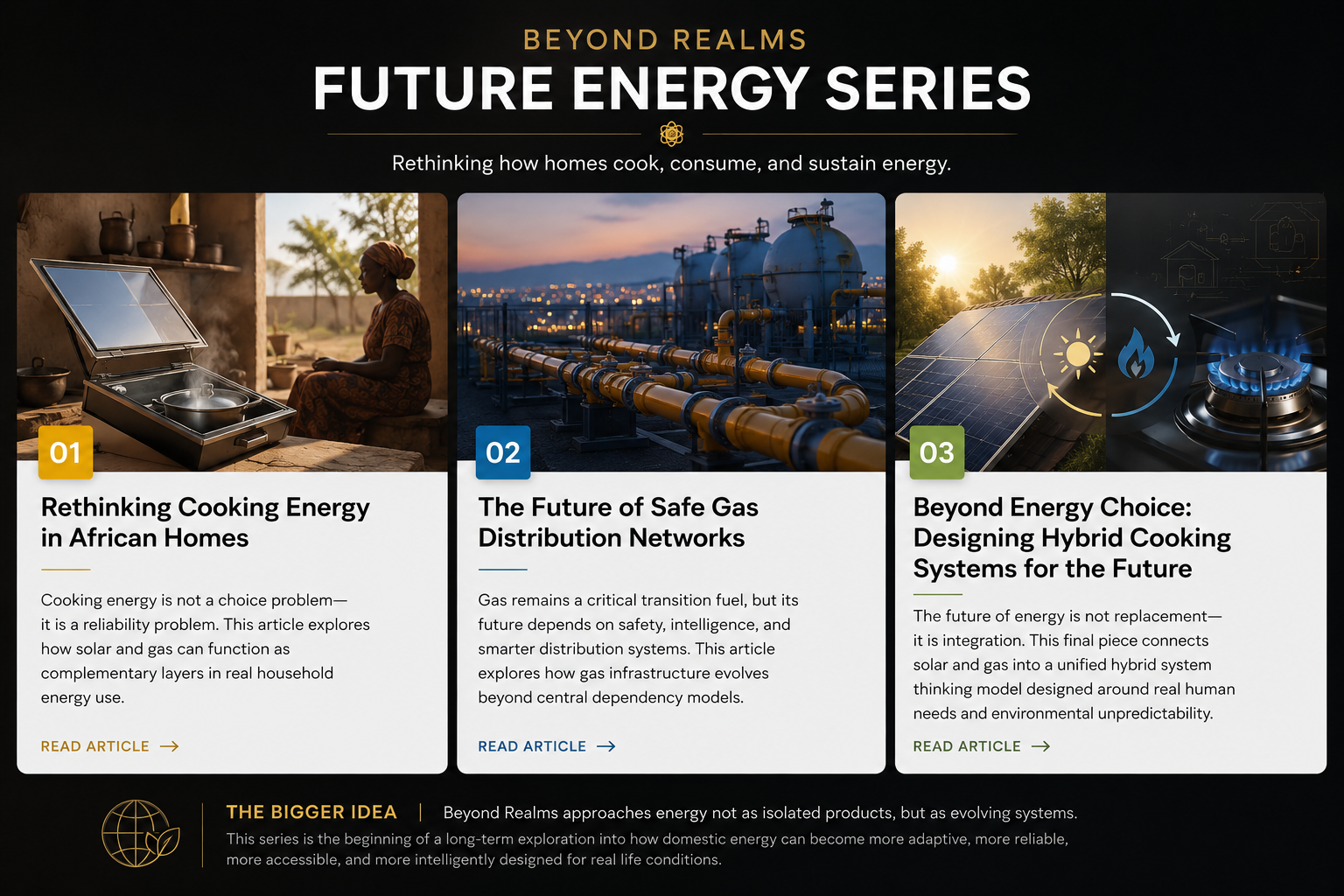
Cooking energy in many African homes is often treated as a simple choice between available options—gas, firewood, electricity, or solar. But in reality, it is not a “choice problem.” It is a reliability problem shaped by cost, access, and environmental conditions.
Homes do not operate in ideal conditions. Energy availability fluctuates across the day, across seasons, and across income levels. This is why the future of cooking energy cannot depend on a single source. It must be designed around complementary systems rather than competing solutions.
Solar energy introduces a powerful opportunity for daytime efficiency. It is clean, widely available in many regions, and reduces dependency on fuel-based cooking over time. However, it is also dependent on environmental conditions—particularly consistent sunlight availability and storage capability.
Gas, on the other hand, plays a different role. It is not limited by weather or time of day. It provides continuity when renewable sources cannot meet immediate demand. In practical terms, it functions as a stabilizing layer in everyday energy use.
The future of cooking energy in African homes is therefore not about replacing one system with another. It is about designing layered energy systems that respond to real-life unpredictability.
A more realistic model is one where solar contributes to reducing baseline cooking cost and energy strain, while gas supports reliability during low solar periods. Together, they form a balanced approach to accessibility and consistency.
Ultimately, the question is not “which energy source is better,” but: How do we design cooking systems that work with people’s lives, not ideal conditions?